We’d been wanting to see Teruel properly since our skiing trip to Javalambre last winter, when we kept catching glimpses of the city from the mountain road and never had time to stop. So on a sunny Sunday in September we finally made the drive - about an hour and a half from home, easy roads, no real traffic once you’re off the motorway.
We parked for free on the esplanade by the train station and walked toward the old town. Almost immediately we passed a playground, which meant our son had opinions about the itinerary before we’d even reached anything on it. We let him run it off for ten minutes, which in hindsight was the right call for the rest of the day.
The Escalinata del Óvalo and the old town
The Escalinata del Óvalo is the thing you see in every photo of Teruel, and it earns it. It’s a neomudéjar staircase from the 1920s, 140 steps of brick and glazed ceramic tile leading up from the station area to the old town, with wrought-iron lampposts along the way. We had a stroller with us and were fully prepared to haul it up step by step, but there’s a lift built into the hillside next to the staircase that takes you straight up instead. We used it both ways and felt slightly smug about it.
At the top, the views back over the station and the surrounding hills are worth the stop on their own. We took the obligatory photos, then wandered into the old town itself, which is small enough that you can’t really get lost - narrow streets and enough shade in September to make the walking pleasant rather than a chore.
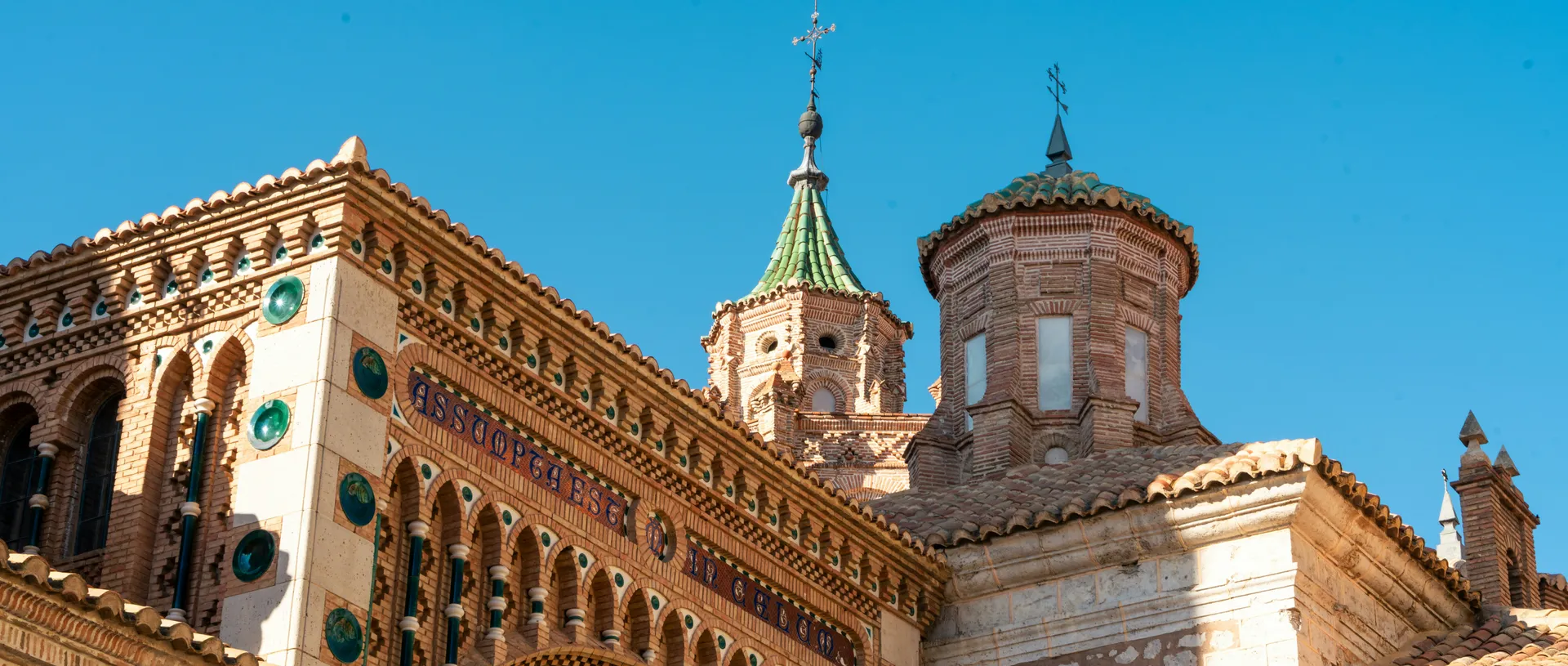
Two stops in particular were worth slowing down for: the Catedral de Santa María de Mediavilla and the Torre de San Pedro. We only saw them from the outside, but that was enough - both towers are part of the Mudéjar Architecture of Aragón UNESCO World Heritage listing, and the brick and glazed tilework up close is more striking than any photo of Teruel prepares you for. If you only have time for two landmarks beyond the Escalinata, we’d make it these.
Lunch, the aqueduct and ice cream on the Torico
By early afternoon we were hungry and picked Restaurante-Café 1900 on the Plaza del Torico, in the modernist dining room that gives the place its name. The food was good when it arrived - traditional Aragonese cooking, nothing fussy - but the service was slow enough that our son’s patience ran out well before the main course did. If you’re eating there with a small child, order early and bring something to keep them occupied.
After lunch we walked out to the Acueducto de los Arcos, the Renaissance aqueduct on the edge of the old town. It’s free to visit and you can actually cross it, along a narrow walkway with railings on both sides in the middle section. It photographs beautifully from a distance, which is honestly better than it feels up close - standing on it, it’s a pleasant but fairly ordinary stone bridge, and we were glad we hadn’t built it up as the highlight of the day. We crossed it, took our photos, and headed back toward the Torico for ice cream before the drive home.
Is it worth it with kids?
Yes, for a day trip. The old town is compact enough that you’re never walking far between things, the playground near the station is a genuine bonus if you’ve got a toddler who needs to burn energy before sightseeing, and the lift at the Escalinata means a stroller isn’t a liability. Teruel doesn’t try to entertain kids the way a theme park does, and by mid-afternoon ours was done with looking at old buildings and ready for ice cream and the car.
That’s fine. We weren’t trying to fill a whole day of activities - we wanted to finally see the place we’d been driving past for a year, and a few hours was exactly the right amount.
Getting there and parking
From near Torrent it’s about an hour and a half on the motorway, mostly straightforward once you’re past Valencia’s outer ring. We’ve written more generally about driving in Spain if the roundabouts and overtaking rules still feel unfamiliar.
We parked for free on the esplanade right by the train station, which sits at the foot of the Escalinata del Óvalo. It’s a five-minute flat walk from the car to the bottom of the staircase, and the lift does the climb for you. We didn’t look for parking anywhere else in the old town itself, and given how easy the station option was, we wouldn’t bother.
What it cost us
Lunch for the three of us at Restaurante-Café 1900 came to somewhere around 30 to 40 euros, including drinks. Parking was free, the Escalinata and its lift are free, and the aqueduct is free to walk across. Ice cream on the Torico was a few euros more. All told it was one of the cheaper family days out we’ve had in Spain - most of what makes Teruel worth seeing doesn’t cost anything.
What we’d do differently
We’d order lunch the moment we sat down instead of taking time to look at the menu, given how long the kitchen took once the order actually went in. Beyond that, honestly not much - the playground on the way in, the lift instead of the stairs, and crossing the aqueduct rather than just photographing it from below were all good calls that we’d make again.
Hasta luego, mis amigos!